What a 63-MPH Night at Harry Reid Airport Teaches Las Vegas About Covered Patio Furniture
Most outdoor furniture advice gets written for places where the worst weather event is a rain shower. Las Vegas plays a different game. Here the threat to your patio set isn’t a gentle drizzle. It’s a wall of wind and dust that shows up with almost no warning.
Anybody who’s watched a cushion sail over a block wall gets the stakes. The desert doesn’t punish bad furniture choices with slow wear. It punishes them in one gusty evening.
That should shape every decision about what goes on a covered patio out here, from the weight of the frames down to where the cushions live overnight. A cover keeps the sun off. It does nothing about the wind, and the wind is the part people underestimate.
The night the wind grounded the planes
It’s easy to treat Las Vegas wind as background noise until it does something loud. In spring 2026 it did exactly that, halting departures at the valley’s main airport and stranding hundreds of travelers.
Local weather coverage reported that gusts reached 63 miles per hour during the event, strong enough to trigger a ground stop and pile up hundreds of delayed flights in a single evening.
If a gust can keep a commercial jet on the tarmac, it can absolutely launch a lightweight aluminum chair across a yard. That’s the mental model. Patio furniture in Las Vegas has to survive forces that ground aircraft, and these events aren’t freak anomalies. Wind advisories and high-wind warnings roll through all spring and into early summer, usually dragging blowing dust behind them.
Buying furniture that survives the gusts
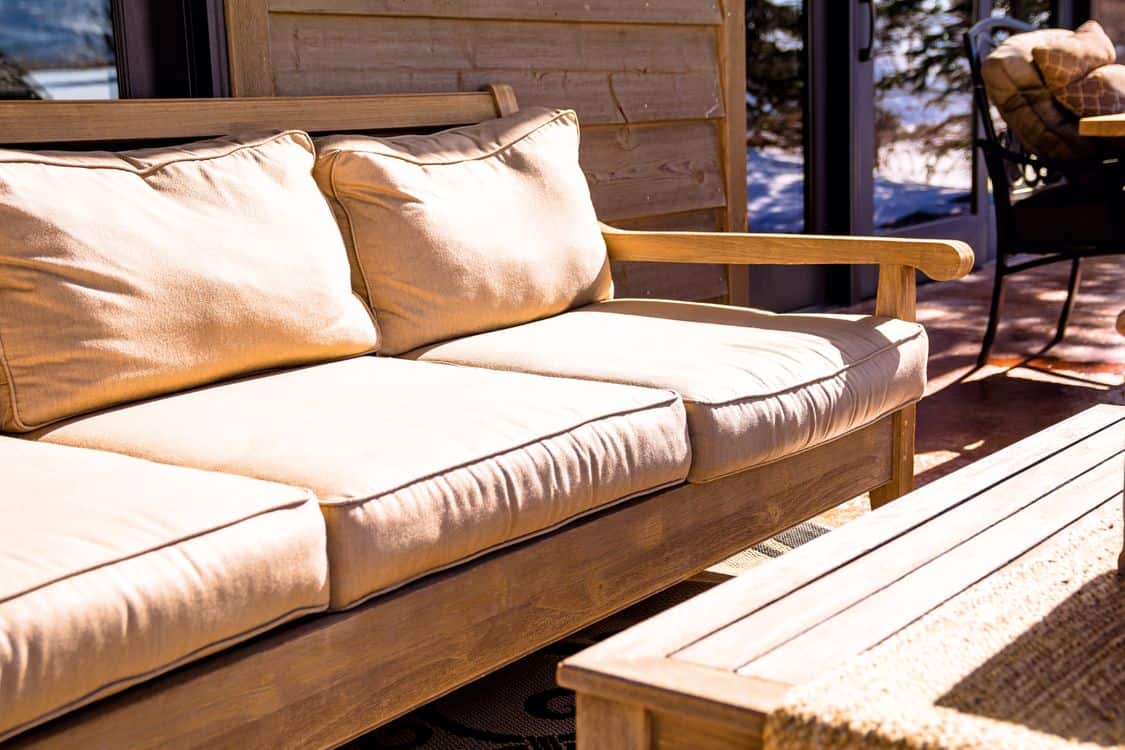
Rule one is weight, or a plan to make up for the lack of it. Powder-coated aluminum is everywhere here because it won’t rust and stays cool to the touch. Its light weight is a liability in wind, though, unless the pieces are heavy-gauge or anchored down.
Smart buyers split the difference. Substantial frames for whatever stays out year-round, and an honest acceptance that anything genuinely light needs to be stackable and stored when a front moves through. A chair you can lift with one finger is a chair the wind can lift too.
Glass tabletops earn extra caution. A tempered top reflects heat and wipes clean, but in a serious gust an unsecured one turns into a hazard. Lower-profile designs and secured tops ride it out far better.
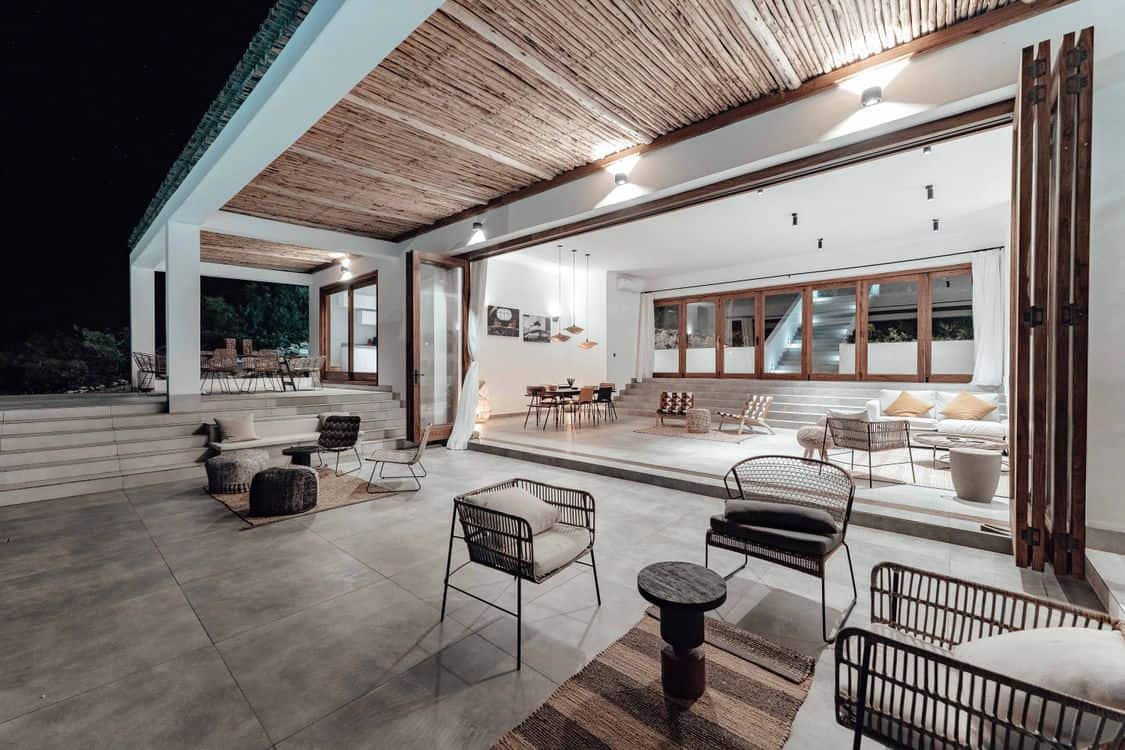
Cushions are the other constant casualty. The move most people land on is a storage bench or deck box that works as seating and as a wind-proof home for cushions when the forecast turns. Heavy-duty covers with real straps handle the rest. A covered patio is the structure that the furniture plan is organized around: it sets the protected footprint, gives storage a place to sit, and defines where the heavy pieces belong.
Designing around dust as much as wind
Wind in the Mojave rarely travels alone. It carries fine dust that works into every fabric weave, every crevice, every hinge. Furniture that ignores that reality looks tired inside a season.
So the materials that last are the ones that wipe clean and the fabrics rated to shed grit instead of trapping it. Synthetic resin wicker, solution-dyed performance fabrics, smooth powder-coated surfaces. Natural fibers and porous materials are the ones that fail first.
Storage strategy matters as much as material. A covered patio with a couple of enclosed pieces lets you clear the deck fast when a dust event is coming, and that’s the single best way to stretch the life of everything out there. Placement helps too: tuck the heaviest, hardest-to-move pieces against the most sheltered wall, keep the light accent items near storage, and the scramble before a windstorm takes two minutes instead of twenty.
The valley’s wind isn’t a flaw to ignore. It’s a design input. Once you treat a 63-mile-per-hour night as a planning assumption instead of a fluke, the furniture choices basically make themselves.