The Guided-Surgery Push Is Changing What Patients Should Ask a Dental Implant Specialist
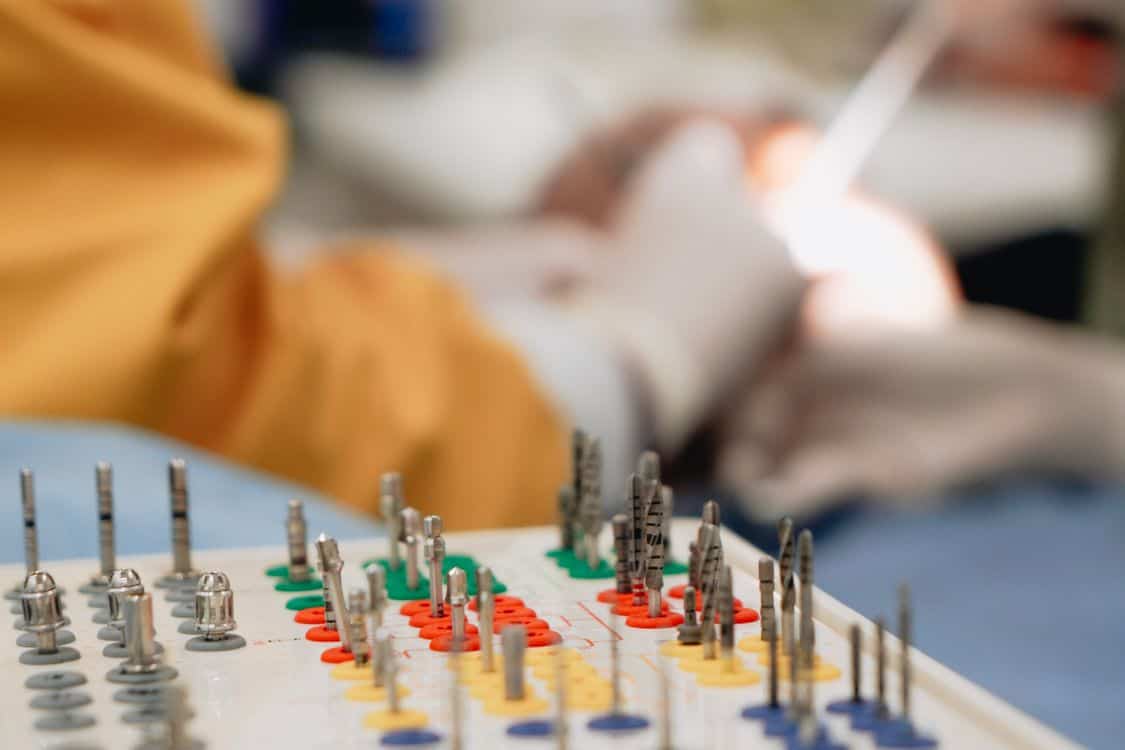
A dental implant consultation used to be difficult for a patient to visualize. The dentist could point to a flat X-ray, describe the available bone, and explain where an implant might go. The patient still had to imagine how that plan would translate into surgery.
That gap is narrowing as three-dimensional imaging, digital impressions, planning software, and surgical guides become more visible parts of implant care. At a guided implant surgery workshop reported in January 2026, clinicians discussed using CBCT scans and digital impressions to map anatomy before treatment. Software was then used to plan the implant’s position, angle, and depth before a physical guide transferred that plan to the mouth.
That changes the consultation. Patients can ask how the team studies the jaw, identifies anatomical limits and turns a proposed restoration into a surgical plan.
Those questions show whether the recommendation comes from an individual diagnosis or a standard package.
Planning is becoming more visible to patients
A dental implant is placed within a small anatomical neighborhood. Bone dimensions matter, but so do the location of nerves, the shape of the ridge, the position of the sinus, the condition of nearby teeth, and the space required for the final restoration. A useful plan has to account for all of them at once.
CBCT imaging can give the treatment team a three-dimensional view of structures that a conventional dental X-ray may not show in the same way. A digital impression can record the teeth and soft-tissue contours. Planning software can bring those records together so the team can consider the restorative goal before choosing an implant position.
“Do you use 3D scans?” is too broad to tell a patient much. A better question is what the scan shows and whether it changes the available options.
A patient might learn that the ridge is narrower than expected, that a nerve limits the usable implant length, or that the proposed angle would make the final tooth difficult to clean. Another patient may discover that a graft once assumed to be necessary is not part of the recommended plan. The value lies in connecting a visible finding to a clinical decision.
The same principle applies to a surgical guide. A guide is a tool made from a plan, not a substitute for one. Patients can ask whether the guide controls only the starting point or also the angle and depth, what circumstances could require the clinician to change course, and how the plan accounts for the final crown, bridge, or full-arch restoration.
That conversation often exposes an overlooked distinction. An implant can be positioned securely in bone yet create restorative problems if its location makes the future tooth awkward, unaesthetic, or difficult to maintain. Planning backward from the intended tooth helps keep surgical and restorative goals aligned.
Technology still depends on clinical judgment
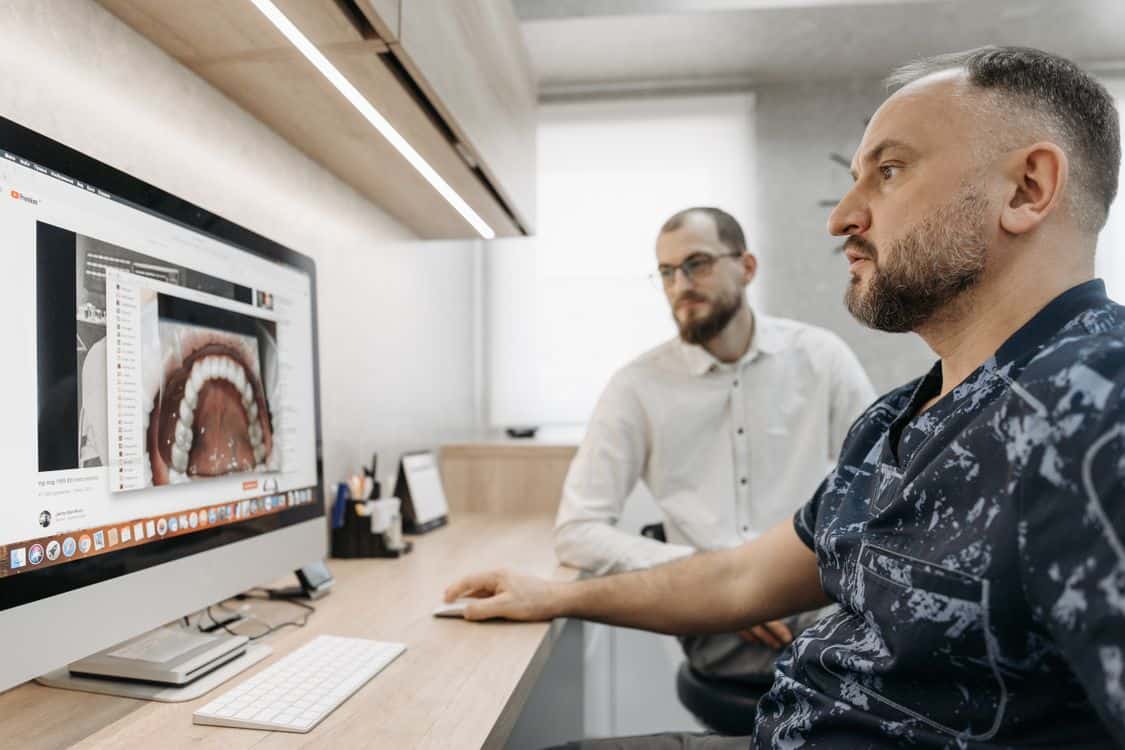
Digital workflows can make treatment more deliberate, but they do not eliminate judgment. Scans can contain artifacts. A guide must fit correctly. Bone quality can feel different during surgery than it appeared on an image. Mouth opening, soft tissue, existing restorations, and movement during scanning can all affect how a digital plan is carried out.
That makes experience a more useful topic than a broad promise of precision. Patients can ask how often the clinician treats cases similar to theirs, who reviews the imaging, who performs the surgery, and who designs the final teeth. A single-tooth case in a generous amount of bone is not the same assignment as a full-arch case near important anatomy.
The answer may involve more than one professional. Some practices coordinate a surgeon, restorative dentist, and dental laboratory. Others manage the process within one team. Neither structure is automatically superior, but the patient should understand who owns each decision and how information moves between them.
Patients should also ask what happens when the digital plan cannot be followed exactly. A provider should explain the limits of the plan and the backup options. Contingency planning is part of competent surgery, especially when extractions, limited bone, immediate temporary teeth or multiple implants are involved.
“Guided surgery” means different things in different offices. Some guides control multiple drilling steps; others guide only part of the procedure. The provider should explain why the chosen method fits the patient’s anatomy and treatment goal.
Sedation and comfort deserve their own discussion. A minimally invasive plan may reduce tissue disruption in selected cases, but it does not guarantee a painless recovery. The provider should describe anesthesia or sedation, expected swelling, diet restrictions, medications, warning signs, and after-hours contact procedures in practical terms.
Better questions follow the entire treatment path
The digital planning story can make implant treatment appear to end once the fixture is accurately placed. In reality, surgery is one stage of a longer process. Healing, temporary teeth, final restoration design, hygiene access, bite adjustment, and professional maintenance all influence how the result performs.
A complete consultation should therefore include a timeline. Patients can ask whether an extraction, bone graft, or periodontal treatment must happen first. They should know whether they may receive a temporary tooth, how long integration is expected to take, and what findings must be present before the final restoration is delivered.
Cost should follow the same whole-process logic. A useful written estimate identifies imaging, extractions, grafting, sedation, implant components, temporary teeth, the final restoration, and scheduled follow-up. A low opening number is difficult to compare when it leaves major stages undefined.
Maintenance is equally specific. A single implant crown may be cleaned differently from an implant-supported bridge or a full-arch prosthesis. Patients should ask which areas tend to trap plaque, whether special floss or brushes will be needed, how often professional cleanings are recommended, and whether the restoration can be removed by the dentist for service.
Equipment lists are easy. The provider still has to explain what the records show, why those findings support the proposed treatment, where uncertainty remains and how the team will care for the result after surgery.