What Craft Beer’s Roughest Year Means for the 100 Taps Behind the Yard House Menu
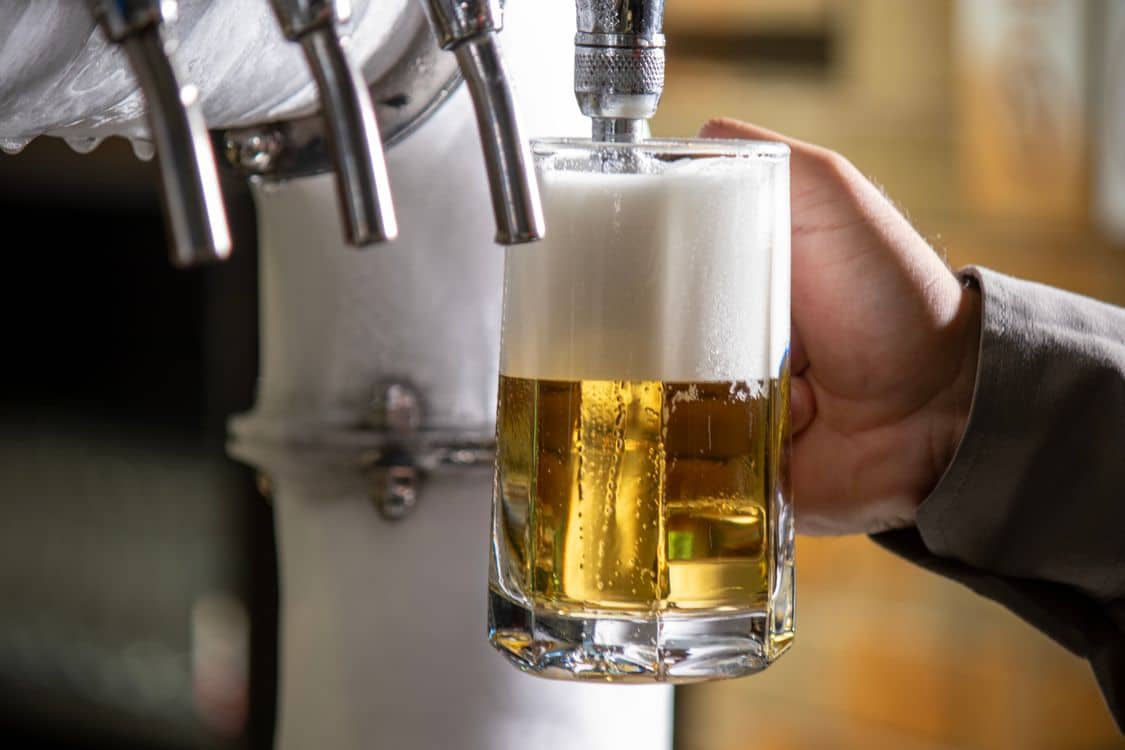
The defining promise of a Yard House is the wall of taps. More than a hundred drafts, the chain likes to say, one of the largest selections anywhere. For most of the brand’s life, that promise rode a tailwind: American craft beer was booming, and a restaurant that celebrated it was selling something the culture wanted.
That tailwind has turned into a headwind. Craft beer just came through one of its hardest years on record, and it is worth asking what a contracting beer landscape means for a restaurant whose whole identity is built on having more of it than anyone else.
The answer is less gloomy than the raw numbers suggest, and it has a lot to do with the difference between selling beer in a store and pouring it in a room.
A Genuine Correction, Not a Blip
The scale of the pullback is real. In its annual industry report, the Brewers Association found that U.S. craft production fell 4% in 2025, with 60% of breweries reporting declines for the year.
The structural signals were starker than the production figure alone. New brewery openings dropped sharply to 300 in 2025, down from 518 the prior year, while closures came in at 481. When closings outrun openings and new entrants slow to a trickle, that is not a seasonal dip. It is a maturing industry shaking out.
There were bright spots inside the gloom. Craft actually held up better than beer overall, which fell 5.7% by volume, so craft’s share of the total beer market edged up from 13.2% to 13.4%. Drinkers were not abandoning craft so much as the whole category was shrinking, with craft losing ground a little more slowly.
Where the Tap Wall Has an Edge

Here is the part that matters for a restaurant like Yard House. The pain in craft beer has been concentrated in the wrong channel for its competitors and the right one for its format.
The Brewers Association’s own analysis pointed to hospitality-driven models, the brewpubs and taprooms where people drink on site, as comparatively resilient even as packaged sales off the shelf weakened. Beer consumed in a lively room, as part of a night out, has held up better than beer carried home from a store. Retail dollar value softened far less than volume, partly because on-premise pours carry higher prices and people kept paying them.
A restaurant built around drinking beer in a social setting sits on the stronger side of that divide. The wall of taps is not competing with the grocery cooler. It is competing with other places to spend an evening, and on that battlefield the experience is the product.
Why Curation Beats Quantity Now
The downturn does change what the tap wall should mean, though. In a boom, having a hundred-plus beers was impressive mostly as a number. In a correction, with weaker brands disappearing, the number matters less than the judgment behind it.
The Brewers Association’s staff economist, Matt Gacioch, argued that success going forward will come down to creating something meaningful and memorable for consumers, with consistent quality and unique experiences setting the survivors apart. For a restaurant, that translates cleanly. A hundred taps of forgettable beer is just inventory. A hundred taps that include sharp local picks and well-kept staples is a reason to choose one room over another.
That is also where the food earns its keep. A deep, well-run draft list paired with a menu broad enough to feed a whole table turns a beer selection into an occasion rather than a transaction. The beer gets people in the door; the room and the food are what the contracting market is actually rewarding.
Craft beer’s roughest year does not undercut the tap-wall format so much as it raises the bar for it. Volume alone no longer impresses. The restaurants that thrive will be the ones treating those hundred-plus handles as a curated experience worth leaving the house for, not just a big number on a chalkboard.