What Fleurs de Villes FLORA Just Showed Toronto Couples About Wedding Flower Styles
Every spring, Toronto’s engaged couples do what engaged couples have always done: scroll endlessly through photographs of other people’s weddings, flag what they like, and try to translate it into something a florist can actually quote. What changed this May is that they had a live reference point sitting in their own city, running for five days across Bloor-Yorkville, built entirely by the designers they’d eventually call for a consultation.
Fleurs de Villes FLORA ran from May 6 to 10, 2026, transforming the Yorkville neighbourhood into a walkable open-air gallery of floral installations. More than 30 large-scale pieces were created by local Toronto florists, each one functioning as a kind of unconstrained design statement — the kind of work that never gets made for a client because no client brief is open-ended enough to allow it. The result was a concentrated snapshot of what Toronto’s working floral designers actually think about form, texture, and colour when no one is asking them to stay on budget or match a colour swatch.
What the Trail Actually Looked Like
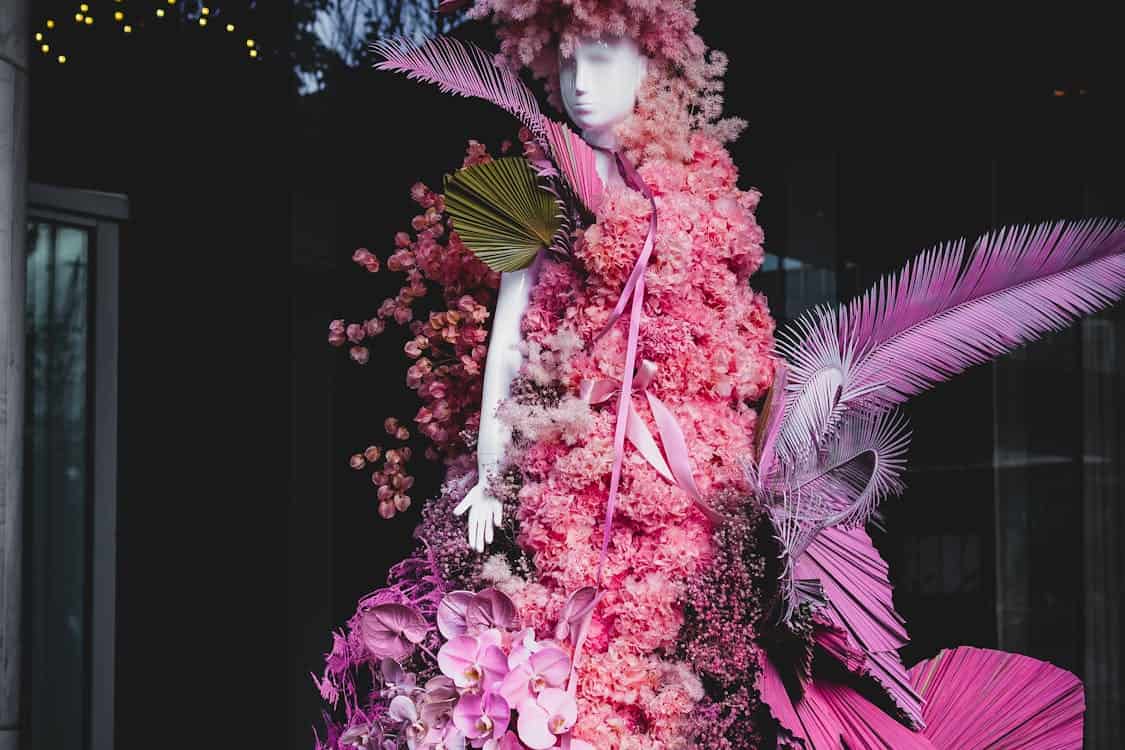
What stood out to people who walked the trail wasn’t maximalism. The dominant vocabulary across installations leaned architectural — structured forms, restrained palettes, a recurring emphasis on the relationship between a single statement element and a lot of carefully managed negative space.
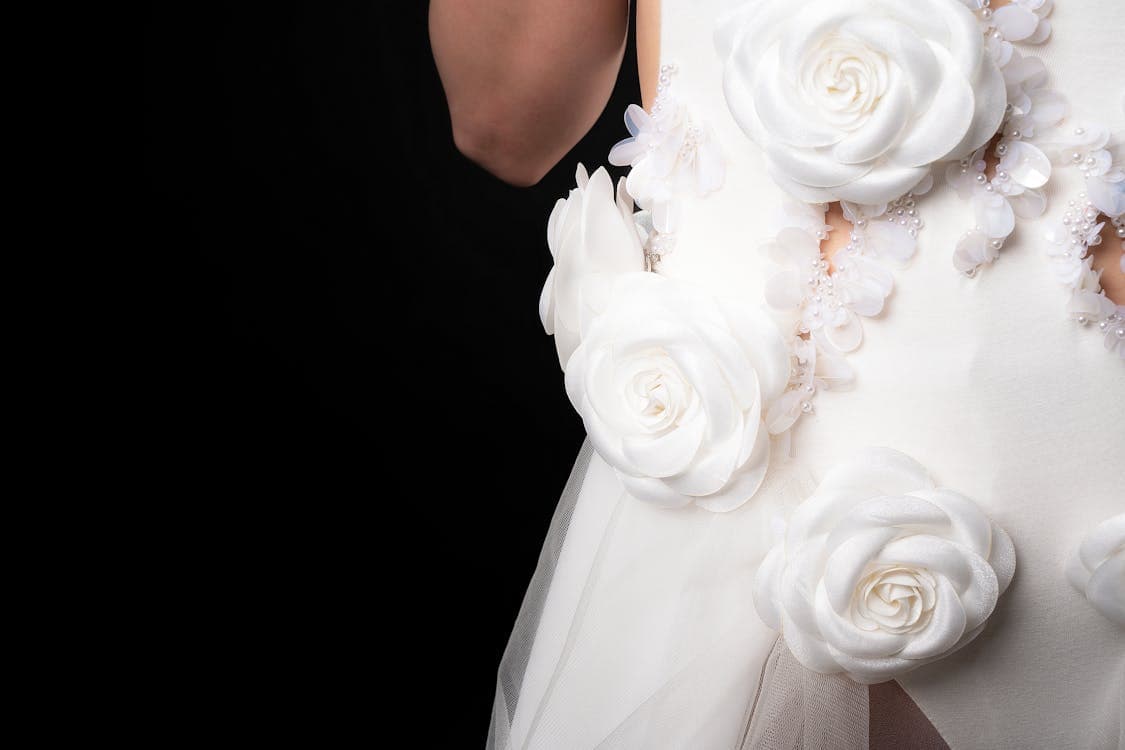
Several pieces used white and soft ivory almost exclusively, with texture doing the work that colour usually handles in more conventional arrangements. Others went the opposite direction: deep, saturated burgundies and terracottas built around a single flower variety rather than the layered multi-bloom approach that tends to dominate wedding work.
The fashion connection embedded in the event’s concept pushed designers toward thinking about proportion and silhouette in ways that translate directly into bridal work. FLORA’s installations were explicitly styled as couture, with floral mannequins dressed in designs that treated petals and stems as fabric.
A bouquet is a carried object. A ceremony arch is a frame. A table centerpiece sits at eye level across from a person for two hours. The compositional logic that makes a floral mannequin read well in a photograph on a Yorkville sidewalk is the same logic that makes a wedding arrangement hold up under direct scrutiny from thirty feet away.
Why Local Reference Points Matter More Than Pinterest
Florists who participated in the event noted that the installations generated a specific kind of inquiry in the days that followed: couples who had attended FLORA arriving at consultations with photographs not of celebrity weddings or Pinterest boards, but of the actual installations they’d seen on the trail. That’s a different starting point.
A photograph taken by the couple themselves, in their own city, of a piece made by a designer they might actually hire, removes several layers of abstraction from the conversation. The reference is already real, already local, already achievable.
The practical consequence for anyone planning a Toronto wedding this year is that the city’s florists just ran a public portfolio review. Every piece on the Yorkville trail was credited. Every designer who participated is identifiable. Couples who wanted to understand what Toronto’s floral scene is actually capable of in 2026 — not what it was capable of three years ago, not what a New York studio was capable of last season — had a direct opportunity to see it.
The aesthetic direction the event showcased maps clearly onto which wedding flower styles are gaining momentum in the city, and couples who paid attention arrived at that understanding weeks before it filters through the usual trend-reporting cycle.
What It Means for Consultations This Season
There’s a secondary effect worth naming. The FLORA event drew significant foot traffic from people who were not planning weddings — residents who came for the music, the floral cocktails at Sassafraz and Amal, the simple pleasure of walking through a neighbourhood covered in flowers. That audience also matters to Toronto’s wedding floral market, indirectly.
When the general public develops a shared visual vocabulary around what thoughtful floral design looks like — built by walking past 30 professional installations rather than scrolling past them — the conversations between couples and florists get easier. The client who has never commissioned a floral arrangement before but attended FLORA arrives with a better instinct for what they’re responding to than one who hasn’t seen professional work in person.
Florists across the city report that the weeks following the event were among the most productive for initial consultations in recent memory. Clients arrived having already resolved some of the ambiguity that usually takes two or three meetings to work through. The shared cultural moment of FLORA gave the 2026 Toronto wedding floral season a starting point that no amount of trend reporting could have manufactured — a real event, in real physical space, with real design decisions visible on real walls. That’s the kind of reference that actually changes what gets built.
Whether the event becomes an annual fixture that shapes the city’s wedding aesthetic on a repeating cycle remains to be seen, but the 2026 edition has already done what it set out to do: show Toronto’s engaged couples what their city’s designers are thinking, and give those designers a reason to think beyond the brief.