Singapore Manufacturers Face Automation Cliff: Training Budgets Double as Workforce Pivots from Assembly to Robotics
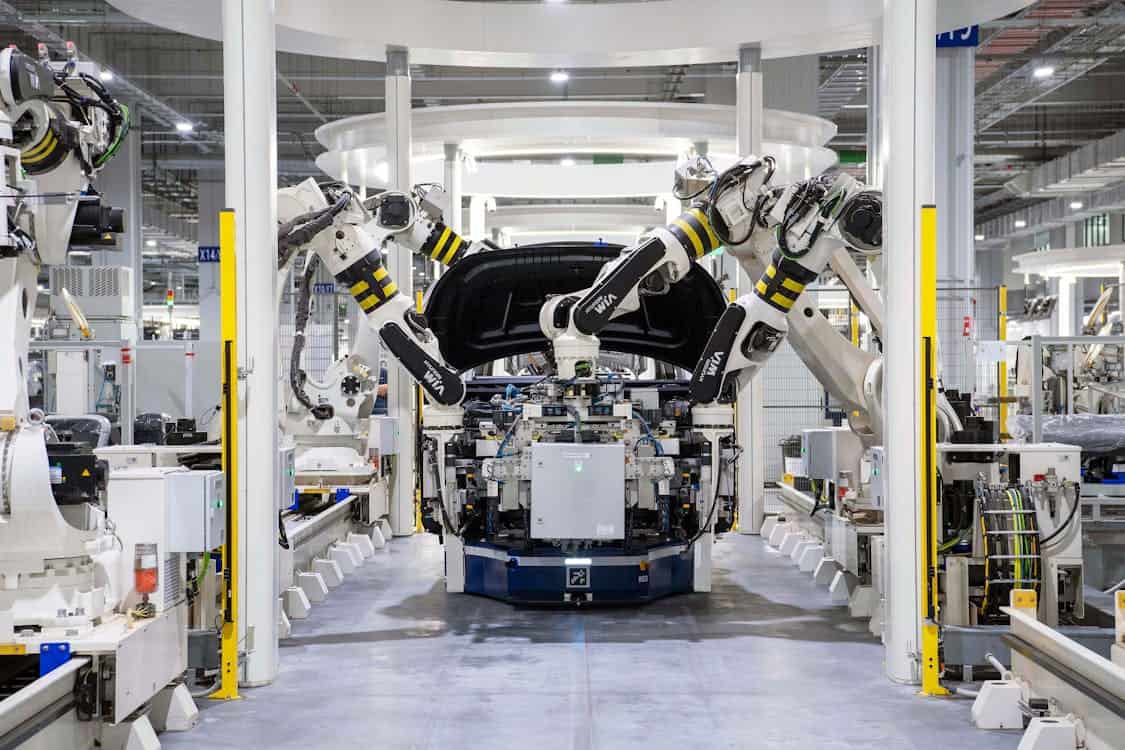
Singapore’s manufacturing sector is undergoing its most dramatic transformation since the electronics boom of the 1970s. The city-state’s factories are deploying robots at the second-highest rate globally—730 robots per 10,000 workers according to Singapore’s Economic Development Board—and the humans who used to do those jobs are facing a stark choice: retrain or become obsolete.
The government is betting $3 billion on advanced manufacturing research and Industry 4.0 adoption. Companies like GlobalFoundries run semiconductor plants with over 350 processes executed by automated systems with minimal human intervention. Micron invested $7 billion in facilities where AI-driven quality inspection reduced defect rates from 0.8% to 0.15%. These aren’t pilot programs or future visions. They’re operational today.
The workers who assembled components, monitored production lines, and performed quality checks manually are watching their roles disappear into robotic cells and machine vision systems. The question facing manufacturers: what happens to these people?
The automation timeline
Singapore’s Manufacturing 2030 vision aims to increase the sector’s value-add by 50%. Industry 4.0 initiatives are accelerating automation, efficiency, and digital integration across factories. A 2025 Deloitte survey found that Singapore companies adopting smart manufacturing technologies achieved 20% higher production output, 20% better employee productivity, and 15% improved capacity utilization. Unplanned downtime decreased 30%, maintenance costs dropped 25%, and energy costs fell 22%.
Those efficiency gains come from machines, not people. When production output increases 20% while headcount stays flat or shrinks, the math is obvious: fewer workers are producing more goods. The semiconductor sector, which comprises 80% of Singapore’s manufacturing output, is leading the automation charge. Precision engineering, biopharmaceuticals, and aerospace are following close behind.
The timeline is compressed. Companies that began automation pilots in 2023 are now scaling to full production. The Smart Industry Readiness Index (SIRI) framework helps manufacturers assess their digital transformation status and plan their roadmap. Most are discovering they need to move faster than initially anticipated. Global competition and customer demands for shorter turnaround times are accelerating automation adoption.
For workers, this creates urgency. The transition period—when both manual and automated processes operate side by side—won’t last long. Once automation reaches full deployment, manual roles simply cease to exist. A production line technician who waits too long to retrain will find there’s no position available when they’re finally ready.
The retraining imperative
Singapore manufacturers are doubling their training budgets, but not by choice. The alternative is mass layoffs followed by expensive external hiring of workers with digital skills. The economics favor retraining: a production worker earning $3,500 monthly who understands the facility’s operations, quality standards, and team dynamics is more valuable than an external hire at $5,000 who knows robotics but needs six months to understand the business.
Government co-funding through SkillsFuture makes the decision easier. Firms can recover significant portions of training costs, reducing the financial risk of retraining programs. The Manufacturing 2030 vision explicitly ties sector growth to workforce upskilling, recognizing that automation deployment fails without skilled workers to operate, maintain, and optimize the systems.
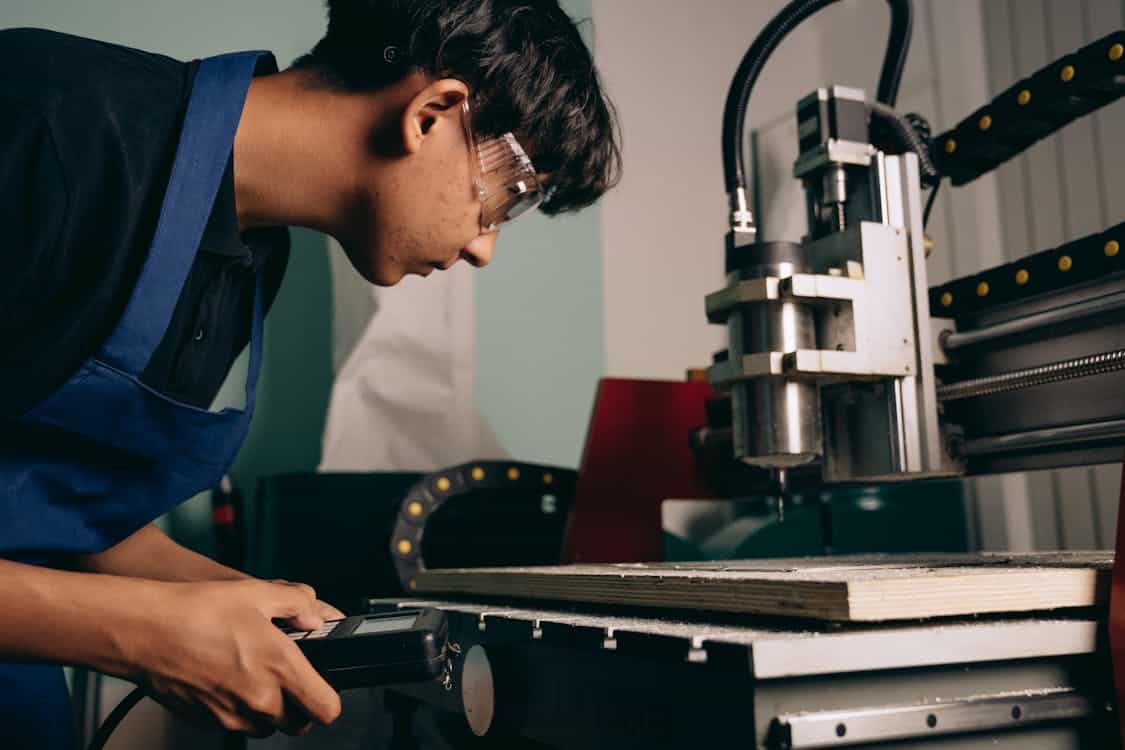
Companies are directing assembly line workers and production technicians toward corporate training Singapore programs focused on robotics operation, predictive maintenance, IoT systems management, and data analytics. The training isn’t theoretical. It’s hands-on, teaching workers to interact with the automated systems replacing their previous jobs. A quality inspector learns to program machine vision algorithms. A line operator learns to monitor robotic cell performance and troubleshoot failures.
The skill gap is substantial. A worker who spent 20 years manually assembling components needs to understand programmable logic controllers, sensor networks, and cloud-based monitoring systems. The training programs compress what would traditionally take years into months, focusing on practical application rather than comprehensive theory. The goal is functional competency: enough knowledge to operate the new systems effectively, not mastery of underlying engineering principles.
The risk of failed retraining
Not everyone makes the transition successfully. Some workers lack the foundational digital literacy required for automation roles. Others struggle with the shift from physical work to system monitoring and data interpretation. Age is a factor—though not universally. Some senior workers adapt quickly while younger ones resist the transition.
Manufacturers are discovering that technical training alone isn’t sufficient. Workers also need help with the psychological adjustment from tangible to abstract work. When your job was physically assembling products, you could see and touch what you accomplished. When your job is monitoring dashboard displays and optimizing algorithms, the sense of accomplishment is less immediate. Some workers find this transition difficult.
Companies that skip the cultural and psychological dimensions of retraining see higher failure rates. Workers complete the technical training but never fully embrace their new roles. They function minimally, doing what’s required but not engaging deeply with the work. Eventually, they leave or underperform to the point of termination.
The successful retraining programs combine technical skill development with role transition support. They help workers understand how their new responsibilities contribute to company success. They create peer support networks where workers navigating the transition can share experiences and problem-solving approaches. They set realistic expectations about the learning curve and provide extended support beyond initial training.
The economic stakes
Singapore’s manufacturing sector contributes approximately 20% to GDP, generating over $280 billion in output annually. The sector employs thousands of workers whose livelihoods depend on these facilities remaining operational and competitive. If automation proceeds without successful workforce retraining, the social cost is severe: mass unemployment among workers whose skills no longer match available jobs.
The alternative—slowing automation to protect jobs—isn’t viable. Singapore’s high labor costs and limited physical space make automation essential for competitiveness. Companies that don’t automate will lose business to competitors who do, eventually forcing closures and job losses anyway. The only sustainable path is automation with retraining.
Government initiatives like the Research, Innovation and Enterprise 2030 plan allocate approximately $29 billion over five years to strengthen research capabilities and technological advancement. But if the existing workforce can’t operate the advanced systems, that investment generates limited returns. The automation infrastructure needs skilled operators to deliver its promised productivity gains.
Manufacturers are also calculating the cost of replacement hiring. If they lay off experienced workers and hire externally for automation roles, they lose institutional knowledge about processes, quality requirements, customer specifications, and operational quirks that aren’t documented anywhere. An external hire might know robotics but won’t know why this particular production line occasionally produces slightly off-spec outputs that are actually within acceptable tolerance for this customer’s application. That knowledge walks out the door with laid-off workers.
The broader transformation
The automation wave isn’t limited to large multinationals. Singapore’s SME manufacturers are also adopting Industry 4.0 technologies, driven by the same competitive pressures. These smaller firms often lack internal training capacity, creating demand for external training providers who can deliver standardized programs across multiple companies.
The Singapore Manufacturing Federation and industry associations are stepping in, organizing group training programs where workers from multiple firms learn together. This approach reduces per-company costs while creating cross-company knowledge networks. A technician from one semiconductor facility learning alongside peers from other facilities builds relationships that later support knowledge sharing and problem-solving across company boundaries.
The transformation extends beyond technical roles. Middle managers who oversaw production teams are learning to manage data systems and optimization algorithms rather than people. Engineers who designed manual processes are learning to design automated workflows. Quality assurance professionals are learning statistical process control for automated systems. The retraining requirement cascades through organizational levels.
What comes next
Singapore’s automation trajectory is clear. Manufacturing output will increasingly come from highly automated facilities operated by smaller, more skilled workforces. The transition period—messy, expensive, uncertain—is already underway. Companies spending heavily on retraining today are investing in their ability to remain operational in an automated future.
The workers who successfully transition will find their roles more interesting and better compensated. Operating sophisticated automated systems pays more than manual assembly. The work is less physically demanding and more intellectually engaging. For those who complete retraining successfully, automation represents opportunity rather than threat.
But the qualifier matters: for those who complete retraining successfully. The workers who can’t or won’t make the transition face difficult prospects. Their previous skills hold limited value in an automated manufacturing environment. Finding comparable work elsewhere becomes challenging when the entire sector is automating simultaneously.
The manufacturing automation cliff isn’t hypothetical or distant. It’s happening now, in facilities across Singapore, as robots replace human workers and training programs scramble to prepare people for roles that didn’t exist five years ago. The companies that succeed will be those that recognize workforce retraining as essential infrastructure for automation, not an optional HR program.
The ones that treat training as a cost to minimize rather than an investment to maximize will discover too late that sophisticated automation systems operated by inadequately trained workers deliver suboptimal results. Or worse, they’ll find themselves unable to operate the systems at all, having eliminated the workers who knew how to run the facility while failing to develop the new skills required.
Singapore’s $3 billion bet on advanced manufacturing only pays off if the workforce can operate the advanced systems. The training programs happening right now determine whether that workforce exists.